What Are the Baseball Field Positions? Best Guide 2026
If you’re new to baseball or just trying to get a better grip on the game, understanding the baseball field positions can feel overwhelming. You’re not alone—many people struggle with remembering who does what and why it matters. But once you get the hang of it, following the game becomes a lot more fun and engaging.
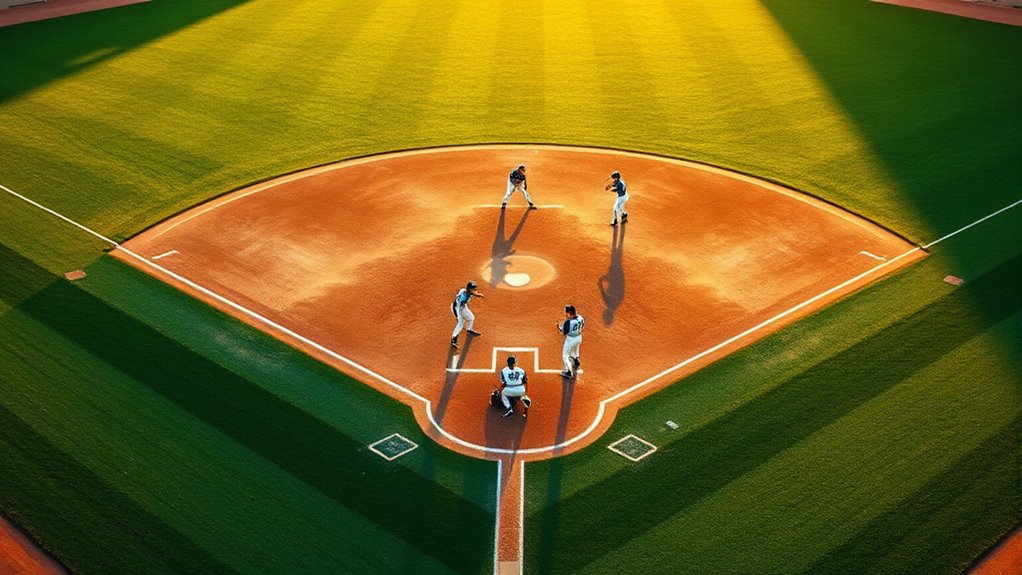
You’ve got nine key baseball positions to know: the pitcher, catcher, four infielders (first base, second base, shortstop, third base), and three outfielders (left, center, right). Each position has unique roles, from the pitcher controlling the game pace to outfielders covering wide zones.
Infielders protect the bases and work as a unit. Understanding these roles helps you follow the game better and catch the strategy behind every play. There’s plenty more to delve into about how each spot shapes the action.
Key Takeaways
- Baseball has nine field positions: pitcher, catcher, four infielders, and three outfielders.
- Infielders include first baseman, second baseman, shortstop, and third baseman. Each has specific defensive roles.
- Outfielders cover left field, center field, and right field. They focus on catching fly balls and preventing extra-base hits.
- The pitcher controls pitch delivery while the catcher manages game strategy and defense behind the plate.
- Each position requires specialized skills and equipment to support team defense and overall game strategy.
Overview of the Nine Baseball Field Positions
Although baseball might seem complex at first, understanding the nine field positions is essential to following the game. Each position has a unique role, and knowing them helps you grasp how the defense works together. The positions include pitcher, catcher, four infielders (first baseman, second baseman, shortstop, third baseman), and three outfielders (left field, center field, right field).
The historical evolution of these positions reflects changes in strategy and player specialization over time. Early baseball had fewer defined roles, but as the game developed, each spot became vital for defense and offense. The equipment used also evolved to support these roles. Catchers, for example, now wear specialized gear like masks and chest protectors, while infielders and outfielders rely on gloves designed for their specific needs. By understanding these basics, you’ll appreciate how each position contributes to the game’s flow.
What the Pitcher Does on the Mound
Every baseball game begins on the pitcher’s mound, where the pitcher controls the game’s pace and flow. As the pitcher, you’re responsible for delivering each pitch with precision, balancing speed and accuracy to challenge the batter. You constantly adjust your throws based on the batter’s stance, the game situation, and overall baseball strategies.
Your ability to read the opponent and anticipate their moves directly impacts your team’s defense. Maintaining player stamina is vital since pitching demands both physical endurance and mental focus. You manage your energy to stay sharp through multiple innings, knowing when to conserve power or push harder.
Each pitch requires strategic thinking, mixing fastballs, curveballs, and changeups to keep hitters off balance. Your role on the mound isn’t just about raw power but smart decision-making that controls the rhythm of the game and sets your team up for success.
How the Catcher Supports the Pitcher and Defense
While the pitcher focuses on delivering each pitch, the catcher plays an essential role in guiding the game from behind the plate. You rely on the catcher not just to receive pitches but to study batter tendencies, call the right pitches, and coordinate the defense. Baseball history shows catchers as strategic leaders, influencing player statistics through pitch framing and game management.
Here’s how the catcher supports the pitcher and defense:
| Role | Description | Impact on Game |
|---|---|---|
| Pitch Calling | Signals pitch type and location | Influences pitch success rate |
| Framing Pitches | Improves strike zone perception | Enhances pitcher’s stats |
| Defensive Coordination | Directs infielders and outfielders | Prevents base hits and runs |
| Base Stealing Control | Throws to catch stealing runners | Limits opponent scoring chances |
Infield Positions: Roles at First, Second, and Third Base
Because the infield is the heartbeat of defense, the first, second, and third basemen each play essential roles in fielding ground balls, turning double plays, and guarding the bases. As the first baseman, you focus on catching throws from other infielders and making quick tags to secure outs. Your positioning helps close the infield and supports baseball strategy by preventing runners from advancing easily.
At second base, you’re the pivot of many double plays. Your quick footwork and strong throws require seamless player communication, especially with the shortstop. You coordinate closely to cover bases and back up throws, ensuring the defense stays sharp.
Though third base is covered in the next section, it’s important to note that all infielders must stay alert and communicate constantly. This teamwork forms the foundation of effective baseball strategy, turning potential hits into outs and keeping the opposing team on their toes.
Why Third Base Is a Key Defensive Spot
Though the third baseman often faces some of the toughest plays on the field, you hold a vital role in defense. Positioned close to the batter, you’re the first line of defense against hard-hit balls down the line. Your quick reflexes and strong arm allow you to make essential throws to first base or start double plays, shaping the game’s momentum.
Baseball strategy relies heavily on your ability to anticipate plays and adjust positioning based on hitters and game situations. You constantly communicate with pitchers and other infielders to coordinate defensive shifts and coverages. This player communication guarantees everyone knows their responsibilities, minimizing errors.
Your role demands sharp instincts and agility, making third base a strategic hub in the infield. By mastering these skills and staying alert, you greatly contribute to your team’s defensive success.
The Shortstop’s Unique Role in the Infield
You play a vital role as the shortstop, covering a large area between second and third base. It’s not just about being in the right spot—you’ve got to have quick reflexes and smart positioning to handle ground balls and turn double plays. To really succeed, you need sharp instincts, agility, and a strong arm.
Defensive Responsibilities Overview
How does the shortstop manage to cover so much ground and make crucial plays that can change the course of a game? It comes down to their defensive responsibilities, which demand quick reflexes, strong arms, and sharp instincts.
You’ll notice the shortstop’s role is central in the infield, often acting as the cutoff between the outfield and the bases. They must read the ball off the bat instantly and react accordingly.
Their positioning takes into account the ballpark layout, ensuring they’re ready for different field sizes and angles. Even the player uniforms help. Gloves, cleats, and other gear are tailored to improve their mobility and grip.
Mastering these responsibilities means you’re a key player in preventing runs and executing double plays.
Positioning and Field Coverage
Where exactly does the shortstop position themselves to cover so much territory effectively? You’ll find the shortstop between second and third base, slightly closer to second, ready to react quickly. This spot allows you to field ground balls, cover second base, and back up throws.
Baseball history shows the shortstop as a pivotal infield role, demanding agility and sharp instincts. To perform well, you need equipment essentials like a well-fitted glove and cleats for quick moves.
| Position | Typical Location | Primary Coverage Area |
|---|---|---|
| Shortstop | Between 2nd & 3rd base | Left side infield |
| Second Base | Right of 2nd base | Right side infield |
| Third Base | Near 3rd base | Left corner infield |
| Shortstop Backup | Near 2nd base basepath | Covers bases and gaps |
| Relay Position | Outfield near 2nd base | Relay throws infield |
Key Skills Required
Although the shortstop covers a broad area on the field, mastering quick reflexes and strong decision-making sets you apart in this role. You need excellent hand-eye coordination to field ground balls cleanly and make accurate throws under pressure.
Your player conditioning must be exceptional since you’re constantly moving, ready to cover gaps or back up teammates. Beyond defense, understanding batting techniques helps you anticipate opponents’ hits, positioning yourself effectively.
Quick thinking lets you decide whether to attempt double plays or hold the ball, often within seconds. Your agility, combined with sharp instincts, makes you the infield’s backbone. By focusing on these key skills, you elevate your reliability and become indispensable to your team’s defensive strategy.
How Outfielders Cover Left, Center, and Right Field
You need to get a good handle on how outfielders manage their responsibilities across left, center, and right field. Each position covers specific zones to maximize field coverage and prevent extra bases. So, let’s take a closer look at how they work together to control the outfield.
Outfielder Responsibilities
When you step into the outfield, each position, left, center, and right field, carries unique responsibilities that keep the defense strong. As an outfielder, your main job is to catch fly balls, field grounders, and prevent extra-base hits.
Left fielders often handle more line drives, so your outfielder training concentrates on quick reactions and strong throws. Center fielders cover the most ground, requiring speed and excellent judgment to back up both corner outfielders.
Right fielders need a powerful arm to make longer throws to third base and home plate. Understanding these roles is key to effective baseball strategy. It helps you anticipate plays and support your teammates.
Mastering your responsibilities ensures the outfield runs smoothly and limits the opposing team’s scoring chances.
Field Coverage Zones
Since each outfield position covers distinct areas, understanding your field coverage zone is essential to making plays efficiently. As a left fielder, you focus on balls hit down the left side, while the center fielder covers the largest area, including deep hits and gaps.
The right fielder handles the right side, often dealing with strong batting strategies targeting that zone. Knowing these zones helps you anticipate plays and back up teammates. You also need to communicate clearly, coordinating with infielders and respecting umpire roles to avoid interference calls.
Mastering your coverage zone improves your range and response time, giving your team an edge in defense. Stay alert to how batters adjust their hitting patterns, and position yourself accordingly to maximize your impact in the outfield.
Differences Between Left, Center, and Right Fielders
Although all three outfielders share the job of catching fly balls and preventing extra-base hits, left, center, and right fielders each have unique responsibilities and skill sets tailored to their specific positions. As an outfielder, you need sharp outfield angles to judge fly balls accurately and coordinate with infielders using infield communication to avoid collisions and cover gaps efficiently.
Here’s how the differences break down:
Left fielder: Often fields more balls off right-handed hitters; requires quick reflexes and strong communication with the third baseman.
Center fielder: Covers the most ground; usually the fastest and most agile, directing outfield alignment and relaying signals.
Right fielder: Needs a strong arm for long throws to third base and home plate; works closely with the shortstop.
All outfielders: Must master reading the ball off the bat and adjusting their positioning dynamically.
Understanding these nuances helps you excel and support your teammates effectively.
How Infielders Protect the Bases and Field Ground Balls
How do infielders effectively protect the bases and field ground balls? You rely on quick reflexes and sharp anticipation, skills honed through years of baseball history. Infielders position themselves strategically to cover bases, ready to field ground balls cleanly and make fast, accurate throws.
By studying player statistics, you can see how top infielders excel in fielding percentage and double plays, reflecting their ability to minimize errors and control the game’s pace. When a ball is hit on the ground, you move swiftly to scoop it up, pivot, and throw, preventing runners from advancing.
Top infielders shine in fielding percentage and double plays, showcasing precision and game control.
Your role demands constant communication and awareness, ensuring no base is left vulnerable. This defensive precision not only stops hits but also turns potential scoring opportunities into outs, showcasing how infielders are pivotal to a team’s success throughout baseball history.
Mastering these skills helps you safeguard bases and keep the opposition in check.
Tips for Understanding Baseball Positions to Enjoy the Game More
When you understand each baseball position, you’ll follow the game with greater excitement and insight. Knowing how players use their equipment essentials, like gloves and helmets, helps you appreciate their skills and strategies better. Plus, learning about baseball history reveals how positions evolved, making the game richer and more engaging.
To get the most from watching baseball, keep these tips in mind:
- Focus on the unique role of each position and how players coordinate during plays.
- Notice how infielders and outfielders adjust their positioning based on the batter and game situation.
- Understand the importance of equipment essentials in protecting players and enhancing their performance.
- Explore baseball history to see how rules and positions have changed, deepening your appreciation for today’s game.
Frequently Asked Questions
How Do Baseball Positions Differ Between Amateur and Professional Leagues?
You’ll notice that in amateur leagues, player strategy often emphasizes position flexibility because rosters are smaller, and players need to cover multiple roles. In professional leagues, you’ll see more specialization, with players mastering specific positions to optimize performance.
While amateurs adapt on the fly, pros focus on strategic positioning to exploit opponents’ weaknesses. So, your approach to position flexibility and player strategy will shift depending on the league’s level.
What Equipment Is Unique to Each Baseball Position?
You’ll notice each baseball position has unique gear: catchers wear heavy protective gear and a specialized mitt for infield agility, while pitchers use gloves designed for grip and control. Infielders rely on smaller gloves to quickly scoop grounders, enhancing their agility.
Outfielders carry larger gloves to aid in outfield strategy, helping them catch fly balls more easily. Your equipment matches your role, boosting your performance on the field.
How Do Player Skills Influence Position Assignments?
You’ll notice coaches gently place players where their talents shine brightest. If you’ve got player agility, you’ll likely be where quick reactions matter most.
Throwing accuracy? That skill often earns you spots demanding precise throws. Your unique strengths guide these choices, ensuring you’re set up for success.
Positions aren’t random; they’re thoughtful assignments matching what you do best on the field.
What Are Common Injuries Associated With Each Position?
You’ll face common injuries like shoulder strains for pitchers, wrist and hand injuries for catchers, and knee issues for infielders who crouch and pivot frequently. Outfielders often deal with hamstring pulls from sprinting.
To reduce risk, focus on injury prevention through proper warm-ups and conditioning. Always use protective gear like helmets, chest protectors, and shin guards. Staying alert and using the right equipment helps keep you safe on the field.
How Do Baseball Positions Change During Extra Innings or Special Plays?
During extra innings, you’ll see extra innings strategies like bringing in defensive specialists or pinch runners to boost your chances. You might shift players to stronger defensive spots or use a pitcher who excels at closing tight games.
For special play adjustments, you’ll reposition fielders to anticipate bunts or steals, and sometimes bring in a faster outfielder. These tweaks keep your defense sharp and ready for anything in high-pressure moments.
Conclusion
Now that you know each baseball position, watching the game will be like reading a thrilling story where every player has an essential role. You’ll see how the pitcher controls the pace, the catcher guides the defense, and the infielders and outfielders work together like a well-oiled machine protecting their territory.
Understanding these roles makes the game more exciting. It helps you appreciate every play and cheer with confidence, deepening your love for the baseball field positions.