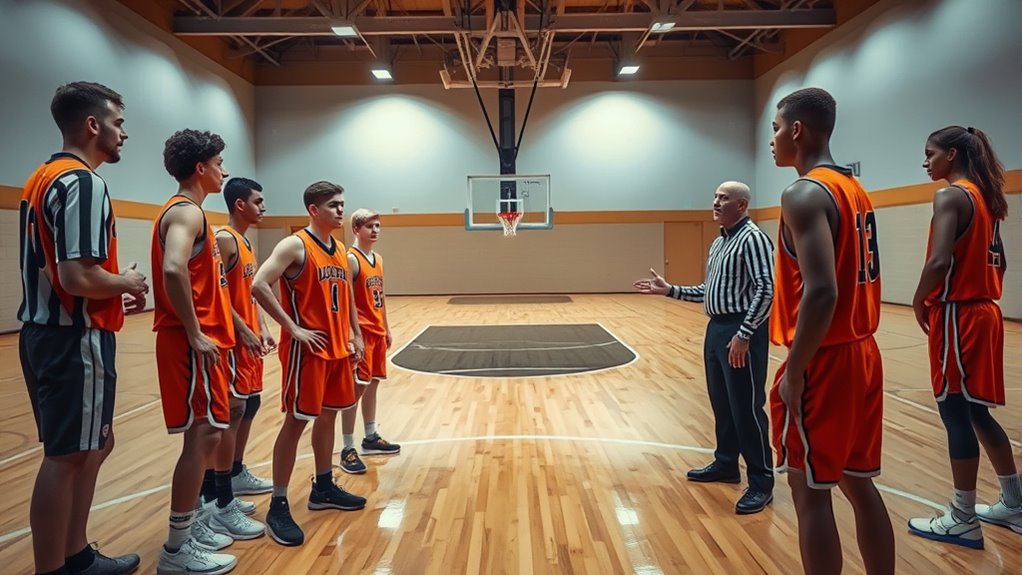
How to Understand Basketball Rules Quickly
Many people struggle to quickly grasp basketball rules, especially when watching a fast-paced game. If you’ve ever felt lost trying to follow the action or confused by all the fouls and substitutions, you’re not alone. Understanding the basics can make watching or playing basketball much more enjoyable.
You can understand basketball rules quickly by focusing on key areas like scoring methods, basic fouls, and player roles. Know how points are earned: two or three from the field and one from free throws. Also, watch for common violations like traveling or double dribbling.
Understanding how possessions work and when substitutions or timeouts happen helps you follow the game flow easily. As you get familiar with these, you’ll naturally pick up strategies and notice differences across game levels.
Key Takeaways
- Learn basic player roles and essential equipment to understand game structure and player responsibilities.
- Memorize scoring methods and game timing, including points values and shot clock rules.
- Familiarize yourself with common violations like traveling, double dribbling, and fouls to follow game flow.
- Understand offensive and defensive strategies that align with rules to grasp gameplay decisions.
- Recognize the purpose of timeouts and substitutions, and note differences between amateur and professional rules.
Basic Basketball Rules You Need to Know
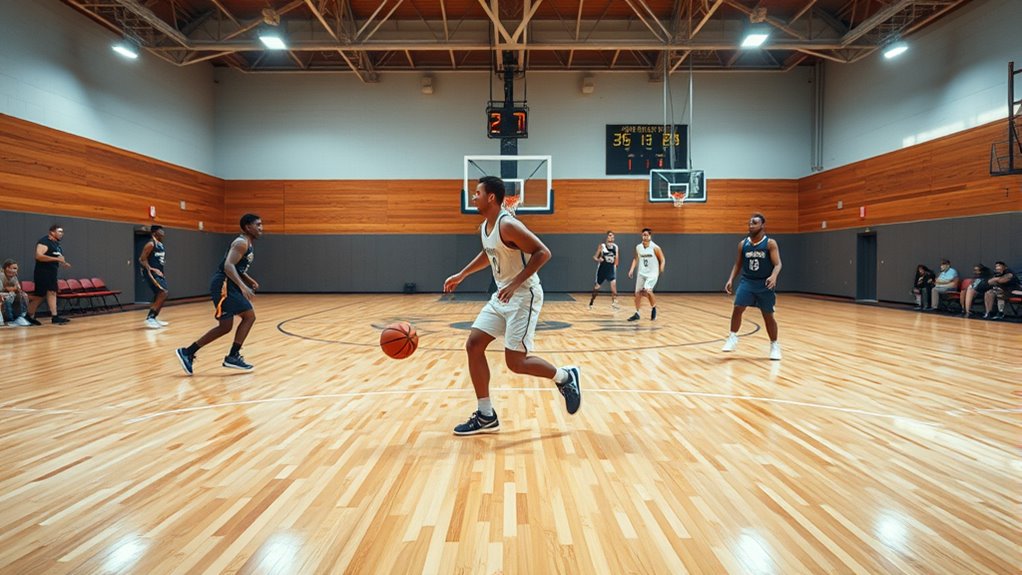
Before you step onto the court, you should know the basic rules that keep the game fair and fast-paced. Basketball requires specific basketball equipment, like a properly inflated ball, suitable shoes, and appropriate uniforms. These essentials guarantee safety and peak performance during the game.
You’ll also want to pay attention to player conditioning, since staying fit helps you keep up with the game’s quick tempo and prevents injuries. The game involves two teams trying to score points by shooting the ball through the opponent’s hoop, all while following rules that regulate dribbling, passing, and movement.
You can’t walk or run without dribbling, and physical contact is limited to avoid fouls. The clock keeps ticking through four quarters, each demanding focus and stamina. Knowing these fundamentals helps you play confidently, respect the game, and enjoy every fast-moving moment on the court.
How Does Scoring Work in Basketball?
You score points by making baskets from different spots on the court, and each spot has its own value. For example, shots made from beyond the three-point line are worth more. Free throws are another way to score—they give you a chance to add single points without any defense trying to stop you. Knowing how the three-point line works and how it affects scoring can really help boost your game knowledge.
Point Values Explained
How exactly does scoring work in basketball? Each basket you make counts as points, with different values depending on where you shoot from. A shot made inside the three-point line earns you two points, while a successful shot beyond that arc scores three points.
When you slam dunk, you’re scoring two points too, but with added style and impact. The shot clock keeps the game moving, forcing your team to attempt a shot within a limited time, usually 24 seconds. This encourages quick decisions and helps maintain a fast pace.
Understanding these point values helps you appreciate the strategy behind shot selection and gameplay, making it easier to follow the action on the court.
Free Throw Basics
Besides scoring from field goals, basketball offers another way to rack up points through free throws. When a player is fouled during a shooting attempt, they get one or more free throws, uncontested shots from the free throw line worth one point each.
Mastering your free throw technique is essential since these shots can decide close games. Focus on a consistent routine: steady your breathing, align your feet, and follow through smoothly.
Your free throw strategy should consider game context. Staying calm under pressure helps you convert these chances. Practicing regularly improves muscle memory, making free throws more automatic.
Three-Point Line Rules
Where exactly do you need to stand to score more points in basketball? You’ll want to shoot from beyond the three-point line. This boundary marks the area for the three-point shot, which earns you an extra point compared to regular field goals.
Here’s what you should know about the three-point line rules:
Your feet must be completely behind the line when you release the ball to count as a three-point shot. If any part of your foot touches the line, the shot is only worth two points.
Officials strictly enforce these rules to keep scoring fair and consistent. Understanding this rule enforcement helps you take advantage of scoring opportunities and avoid losing valuable points during gameplay.
Common Basketball Rules Violations and Fouls
Although basketball is fast-paced and exciting, you need to know the common violations and fouls that can slow down the game or cost your team points. Here’s a quick violations overview: traveling happens when you move your feet illegally while holding the ball, and double dribbling means you dribble with both hands or stop then start dribbling again.
Other violations include goaltending, where you interfere with a ball on its way down to the basket, and backcourt violations, which occur when you cross back into your defensive half after crossing into the offensive half.
Foul types vary, but personal fouls are the most common. They involve illegal physical contact, like hitting or pushing an opponent. You’ll also encounter technical fouls, often for unsportsmanlike conduct, and flagrant fouls, which are severe and can lead to penalties or ejections.
Knowing these rules helps you play smart and avoid costly mistakes.
How the Game Flows: Periods and Possessions
You’ll notice the game is split into specific periods, each lasting a set amount of time. During these periods, possessions switch back and forth between the teams as they try to score. Understanding this flow makes it easier to keep up with the action. So, let’s break down how these periods and possessions shape the game.
Understanding Game Periods
How does a basketball game keep its rhythm and excitement? It’s all about understanding the game periods and how they shape play. You’ll see the game divided into quarters or halves, with the clock ticking down to create urgency.
Here’s what you should know:
Game clock management is essential. Teams must use their time wisely during each period.
Shot clock regulations force teams to take a shot within a set time. This keeps the pace fast.
Periods give players breaks, letting you catch your breath and strategize for the next push.
How Possessions Work
The flow of a basketball game depends not just on the periods but also on how teams manage their possessions. Each team gets the ball during their possession, aiming to score before the shot clock expires.
When a team misses a shot or commits a violation, possession changes to the other team. Understanding turnover rules is key here. Turnovers happen when a team loses the ball due to errors like traveling, double dribbling, or bad passes, instantly giving the other team control.
These possession changes keep the game dynamic and fast-paced, forcing you to stay alert. By grasping how possessions work, you’ll better follow the rhythm of the game and appreciate how vital each possession and turnover is to the overall flow.
Player Roles on the Court Explained
Although basketball may seem straightforward, understanding each player’s role on the court can help you appreciate the game’s strategy and flow. Each player has specific responsibilities tied to player positioning and shooting techniques that influence how the team performs.
Here are the three main roles you’ll encounter:
Point Guard: You’ll be the team’s primary ball-handler, directing plays and setting up teammates for scoring chances. Your shooting techniques focus on mid-range shots and quick passes.
Shooting Guard: Your role centers on scoring, so you’ll need sharp shooting techniques, especially from beyond the arc. You’ll position yourself to create open shots.
Center: You’ll dominate near the basket, focusing on rebounds, blocks, and close-range shots. Your positioning is key to controlling the paint area.
How Offense and Defense Affect Basketball Rules
You need to understand how offensive play regulations shape what you can do with the ball. At the same time, defensive strategy limitations affect how you guard opponents without fouling. Both sides influence the game flow and keep the action fair and exciting. It’s really about finding the right balance between pushing your offense and respecting defensive rules. When you get that, the game runs smoothly and everyone enjoys the competition more.
Offensive Play Regulations
When you’re on offense, understanding how your actions interact with defensive rules can make or break your play. You need to be mindful of offensive fouls, which occur if you charge into a defender or use excessive force. These fouls can stop your momentum and give possession to the other team.
Also, avoid shot clock violations by taking a shot within the allotted time, usually 24 seconds. Failing to do so results in a turnover. Here’s what to keep in mind:
- Avoid initiating contact to prevent offensive fouls.
- Keep an eye on the shot clock to ensure timely attempts.
- Use smart ball movement to create open shots without rushing.
Mastering these regulations helps you play smarter and keep control on offense.
Defensive Strategy Limitations
Since defenders must react to offensive moves, their strategies face specific limitations designed to keep the game fair and fluid. You can’t just block or interfere recklessly. Rule enforcement guarantees defensive strategy stays within legal bounds.
You must avoid illegal contact, such as reaching in or holding, or risk fouls. Defensive players also can’t stay in the paint too long without guarding someone, or they’ll get a three-second violation. These limits balance defense with offense, preventing unfair advantages.
| Defensive Strategy Limitations | Rule Enforcement Reason |
|---|---|
| No illegal contact | Prevents fouls and injuries |
| No defensive three-second rule | Maintains offensive space |
| No blocking shots illegally | Ensures fair play |
| No excessive physicality | Protects player safety |
Impact on Game Flow
How do the rules governing offense and defense shape the flow of a basketball game? They directly influence your impact strategy and the game momentum. When you understand these rules, you can better anticipate shifts and play smarter.
Offensive rules like the 24-second shot clock push you to act quickly, keeping the pace lively. Defensive restrictions, such as the three-second defensive violation, prevent stalling and promote active guarding.
Rules on fouls and turnovers create momentum swings, forcing you to adjust your approach rapidly.
Common Basketball Terms and Referee Calls
Understanding common basketball terms and referee calls is essential for following the game closely and appreciating the flow of play. When you know terms like “traveling,” “double dribble,” or “block,” you’ll catch the action better and enjoy fan engagement more fully.
Referee calls, such as fouls or violations, signal when a player breaks the rules, helping you understand why the game pauses or changes pace.
As you watch, notice how basketball apparel often features numbers and names, making it easier to spot players involved in specific plays or calls. This connection boosts your involvement and helps you follow referee decisions.
Basketball Rules for Timeouts and Substitutions
Although timeouts and substitutions might seem straightforward, knowing their specific rules can give you a deeper grasp of game strategy. Timeouts let coaches pause the game to regroup, while substitutions keep players fresh and effective. Mastering timeout strategies and substitution timing can turn the tide in close games.
Understanding timeouts and substitutions is key to mastering game strategy and gaining a competitive edge.
Here are key points to remember:
- Teams get a limited number of timeouts per game, so using them wisely is essential for momentum shifts or final plays.
- Substitutions can happen only during stoppages, requiring you to anticipate the best moments to swap players without disrupting flow.
- Coaches often use substitution timing to exploit matchups or rest star players, balancing endurance and performance.
Key Differences Between Amateur and Professional Basketball Rules
Timeouts and substitutions play a big role in both amateur and professional basketball, but the rules governing them can vary considerably between levels. In professional games, you’ll notice stricter regulations on timeout durations and substitution patterns. Amateur leagues tend to be more flexible, allowing more frequent substitutions to accommodate varying skill levels.
Here’s a quick comparison:
| Aspect | Amateur Basketball |
|---|---|
| Timeout Length | Usually 1-2 minutes |
| Substitution Limits | Unlimited or more frequent |
| Basketball Apparel | More relaxed, varied |
| Fan Etiquette | Informal, family-friendly |
| Aspect | Professional Basketball |
| Timeout Length | Typically 30-60 seconds |
| Substitution Limits | Strict, limited during play |
| Basketball Apparel | Regulated uniforms and shoes |
| Fan Etiquette | Formal, strict conduct rules |
Understanding these differences helps you appreciate the game’s structure and enjoy it whether you’re playing or watching.
How to Practice and Apply Basketball Rules When Playing
When you step onto the court, knowing the rules isn’t enough. You need to actively practice applying them during play. Start by familiarizing yourself with the court markings. Understanding where boundaries, the three-point line, and free-throw areas lie helps you make smart decisions instantly.
Knowing the rules is just the start; understanding court markings helps you make quick, smart decisions during play.
Wearing proper basketball footwear improves your movement and balance, letting you stay agile while respecting rules like traveling or double dribbling.
To sharpen your skills, try these practical steps:
- Play pickup games focusing on rule enforcement, like calling out violations immediately.
- Practice with a coach or teammate who can give real-time feedback on your rule application.
- Watch game footage to see how pros apply rules, then mimic their moves and decisions.
Frequently Asked Questions
What Are the Origins of Basketball and Its Original Rules?
You’ll find basketball’s history origins back in 1891 when Dr. James Naismith invented it to keep athletes active indoors. He developed 13 original rules that focused on fairness and safety, like no running with the ball and no physical contact.
Understanding this rule development helps you see why modern basketball emphasizes skill and sportsmanship, building directly on those early guidelines. Knowing this background makes the game’s flow much clearer to you.
How Do Basketball Rules Differ Internationally Beyond Amateur and Professional Play?
You’ll notice international variations in basketball rules, especially between FIBA and NBA games. These rule adaptations affect game length, court size, and three-point line distance.
For example, FIBA games have four 10-minute quarters, while the NBA uses 12-minute ones. Also, international play allows more physical contact and has different foul rules.
Understanding these differences helps you appreciate how basketball adapts globally beyond just amateur or professional levels.
What Technology Is Used to Assist Referees in Basketball Games?
Imagine you’re a referee making a split-second call, like a chess player anticipating moves. To help, basketball uses video review and sensor technology.
Video review lets you replay tricky moments, ensuring accuracy. Sensor technology tracks player movements and ball position in real-time, helping you spot fouls or out-of-bounds plays instantly.
These tools work together like your eyes and brain, making sure you call the game fairly and confidently every time.
How Have Basketball Rules Evolved Over the Decades?
You’ll notice basketball rules have evolved to improve player safety and speed up the game pace. Over the decades, officials introduced stricter foul regulations and shot clocks to prevent stalling.
They’ve also adjusted contact rules, reducing dangerous plays to protect players. These changes keep the game exciting and safer, letting you enjoy faster, more dynamic action without risking injury.
Understanding these shifts helps you appreciate the sport’s ongoing development.
What Are the Most Controversial Rule Changes in Basketball History?
You’d think fans love every rule change, right? Ironically, the most controversial ones like the hand-checking ban and the introduction of the three-point line sparked wild fan reactions. They either cheered or cursed rule enforcement, depending on their team’s style.
The shot clock’s tweaks also caused uproar, forcing faster play. These changes reshaped basketball but often left fans debating if the game’s soul was preserved or lost in the process.
Conclusion
Learning basketball rules might seem tricky at first, but once you grasp the basics, the game flows smoothly and becomes exciting. While fouls and violations can slow the pace, understanding them actually helps you play smarter, not just harder.
You’ll go from confused beginner to confident player by knowing scoring, positions, and referee calls. So, don’t get overwhelmed. Embrace the rules and watch how they transform your game from chaotic to controlled fun.
This is the key to understanding basketball rules quickly.