How to Play Baseball in 10 Easy Steps for Beginners
How to Play Baseball? If you’re new to baseball, you’re not alone in feeling overwhelmed by all the rules, positions, and skills you need to learn. Many beginners struggle with where to start and how to build a solid foundation without getting frustrated.
Fortunately, with the right guidance, you can quickly get comfortable on the field and enjoy the game to its fullest.
To play baseball, first learn the basic rules and field positions. Master your batting stance and swing, then practice throwing and catching fundamentals.
Get comfortable with pitching basics and develop solid fielding techniques.
Understand common strategies to outsmart opponents.
Equip yourself with the essential gear for safety and comfort.
Join a local team or find places to play regularly.
With these steps, you’ll build a strong foundation and be ready to improve your skills and game awareness.
How to Play Baseball Key Takeaways
- Learn the basic rules, including how to score runs, get outs, and alternate between batting and fielding.
- Master the fundamental batting stance, grip, and swing to consistently make solid contact with the ball.
- Practice proper throwing mechanics with a firm grip, over-the-top arm motion, and accurate follow-through.
- Understand fielding techniques: stay low, keep your eyes on the ball, and improve footwork for ground coverage.
- Develop base running skills like maintaining posture, timing steals, and recognizing pitcher cues for safe advances.
Get to Know Baseball’s Basic Rules
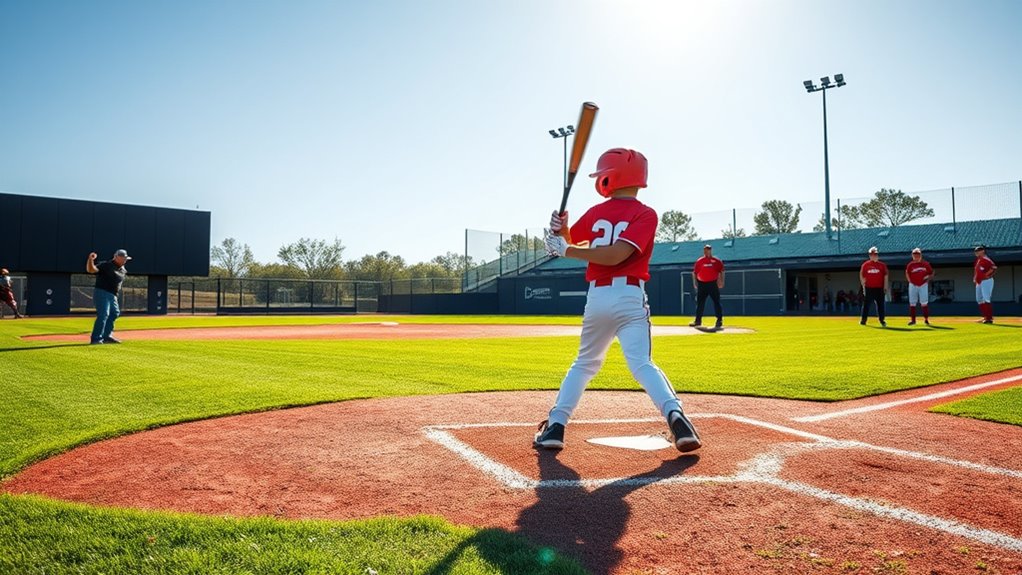
Before you step onto the field, you need to understand baseball’s basic rules. Baseball is a game where two teams take turns batting and fielding, aiming to score runs by hitting the ball and running around four bases.
Understanding baseball’s basics is essential before playing: two teams alternate batting and fielding to score runs by circling four bases.
The defense tries to get three outs to switch roles. The game has deep roots in baseball history, evolving since the 19th century, with legendary figures like Babe Ruth and Jackie Robinson shaping how it’s played today.
You’ll find that each player has a specific role, but understanding the core rule that you score by safely reaching home plate after touching all bases is key. Pitchers throw the ball to batters, who must decide to swing or let it pass.
Strikeouts, walks, and hits all affect the flow of the game. By grasping these basics, you’re ready to appreciate the sport and follow in the footsteps of famous players who mastered these fundamentals.
Learn the Different Baseball Positions on the Field
Now that you know the basic rules, it’s time to get familiar with the different positions on the field. You’ll learn about the infield spots, the outfield roles, and what the catcher does. Knowing these will help you play smarter and communicate better during the game.
Infield Positions Overview
Where exactly do infielders stand, and what roles do they play during a game? Infielders position themselves around the bases and the pitcher’s mound, ready to field ground balls and make quick plays. Your infield positioning impacts how you react to hits and cover bases effectively. Choosing the right glove is key. Smaller gloves offer better control for quick throws.
Here are the main infield positions to know:
- First Baseman – Covers first base, often catching throws to get runners out.
- Second Baseman – Handles balls hit between first and second base, requires quick glove work.
- Shortstop – Positioned between second and third base, often the most agile infielder, vital for double plays.
Mastering these spots and glove selection sets you up for infield success.
Outfield Roles Explained
While infielders focus on quick reactions and base coverage close to the action, outfielders guard the expansive grass beyond the infield. They track down fly balls and prevent extra-base hits.
You’ll find three main outfield positions: left field, center field, and right field. Each has unique responsibilities depending on the hitter and game situation. Mastering outfield positioning helps you cover more ground efficiently and back up infielders when needed.
During outfield training, you’ll practice reading the ball off the bat, improving your sprint speed, and perfecting your catches on the run. Strong communication with your fellow outfielders is essential to avoid collisions and guarantee every ball is tracked.
Focus on these skills, and you’ll become a reliable last line of defense in the outfield.
Key Catcher Responsibilities
Although the catcher stays behind home plate, you’ll find that their role is one of the most demanding and strategic on the field. You need sharp skills in catcher positioning to control the game’s pace and protect the plate.
Mastering signal communication with the pitcher is essential to call the right pitches and keep opponents guessing. Here are three key responsibilities you’ll handle as a catcher:
- Manage Pitch Calls: Use signs to communicate pitch types and locations, adapting to the batter’s weaknesses.
- Control the Field: Position yourself to block wild pitches and throw out base stealers efficiently.
- Lead the Defense: Observe the field, guide teammates, and maintain focus to prevent scoring chances.
As a catcher, your vigilance and strategy can change the game’s outcome.
Master the Proper Baseball Batting Stance and Swing
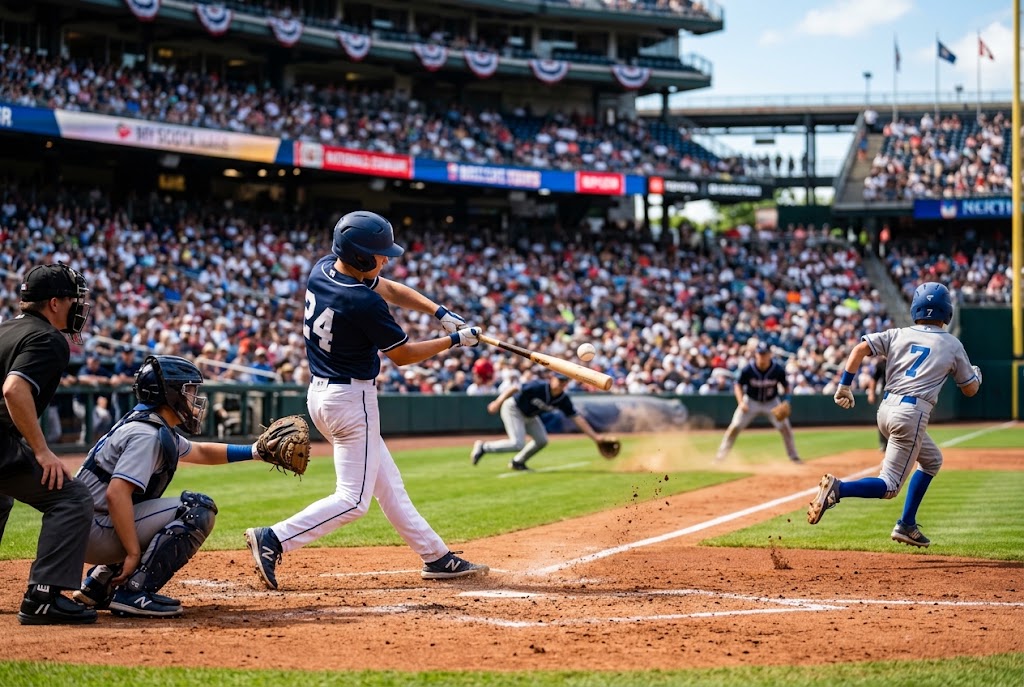
To master the proper baseball batting stance and swing, you need to focus on balance, grip, and body positioning. Start by placing your feet shoulder-width apart, with your weight evenly distributed. Your knees should be slightly bent, and your body relaxed but ready. This solid batting stance helps you stay balanced and react quickly to pitches.
Next, grip the bat firmly but not too tight, aligning your knuckles to promote a smooth swing. Your hands should be close together near the handle’s end, allowing better control. When you swing, engage your hips and rotate your body while keeping your eyes on the ball. Good swing mechanics combine power and precision, so avoid over-swinging or losing balance.
Practice these fundamentals consistently, and your batting stance and swing will improve, helping you make solid contact and drive the ball effectively every time.
Practice Baseball Throwing and Catching Fundamentals
Now that you’ve got your batting stance down, it’s time to shift gears and focus on throwing and catching. You’ll want to practice proper throwing mechanics—they really help improve your accuracy and power. At the same time, getting the hang of basic catching techniques will make you field like a pro in no time.
Proper Throwing Mechanics
Mastering proper throwing mechanics is essential if you want to improve your accuracy and power on the field. When you throw correctly, you not only make stronger plays but also show respect for baseball etiquette by avoiding wild throws that can hurt teammates.
Plus, solid mechanics boost team communication since teammates trust your throws.
Focus on these three key steps:
- Grip and stance: Hold the ball firmly with your fingers, keep your feet shoulder-width apart, and face your target.
- Arm motion: Use a smooth, over-the-top arm path, leading with your elbow and snapping your wrist for velocity.
- Follow-through: Step toward your target, release the ball at the right moment, and finish by pointing your throwing hand at the target.
Practice consistently to build confidence and teamwork.
Catching Techniques Basics
Although catching might seem straightforward, developing solid techniques is vital for consistently securing the ball and supporting your team’s defense. Start by focusing on glove positioning. Keep your glove open and relaxed, angled toward the ball’s path. This helps you catch smoothly without fumbling.
Position your throwing hand close to the glove, ready to secure the ball quickly after the catch. Improving your hand-eye coordination is essential. Track the ball from the pitcher’s release to your glove, anticipating its speed and trajectory.
Practice catching balls of different speeds and angles to boost your reflexes. Remember, staying balanced with knees slightly bent allows you to adjust quickly. Mastering these basics builds confidence and reliability, making you a valuable asset on the field.
Get Comfortable With Baseball Pitching Basics
Before you can throw a perfect strike, you need to get comfortable with the basics of baseball pitching. Pitching is more than just throwing the ball. It’s a key part of baseball culture and connects you to fan traditions that celebrate skill and strategy. Start by mastering these essentials:
- Grip and Stance: Hold the ball firmly with your fingers, not your palm, and position your feet shoulder-width apart for balance.
- Windup and Delivery: Develop a smooth, consistent motion that builds momentum without sacrificing control.
- Aim and Follow-Through: Focus on your target, usually the catcher’s mitt. Complete your throw with a strong, natural follow-through.
Learn How to Run Baseball Bases Effectively
To run baseball bases effectively, you’ve got to master proper running technique and really get a feel for the right moments to steal bases. It’s not just about speed; it’s about how you move.
Proper Running Technique
When you run the bases properly, you increase your chances of scoring and helping your team win. Mastering proper running technique starts with refining your running form and practicing sprint drills regularly. Focus on these key points:
- Maintain an upright posture with a slight forward lean to maximize speed and balance.
- Pump your arms efficiently; strong arm movement propels your legs faster.
- Keep your strides quick and light, avoiding overstriding to sustain acceleration around bases.
Sprint drills improve your explosive power and help you react faster during plays. Consistent practice of these techniques enhances your base running efficiency, letting you advance quickly and safely. Remember, good running form saves precious seconds and can make the difference between out and safe.
Timing Your Steals
How do you know the perfect moment to steal a base? It all comes down to mastering timing techniques. First, watch the pitcher’s movements closely. When their attention shifts away from you or they take a slow step, that’s your cue.
You want to break for the next base just as they begin their delivery. Also, pay attention to the catcher’s arm and positioning. Stealing bases relies on anticipating these cues and reacting quickly.
Practice reading pitchers and timing your lead-offs to gain an advantage. Remember, the key is to minimize the distance between your start and the pitcher’s throw. The better you get at timing your steals, the more successful and confident you’ll be on the basepaths.
Develop Baseball Fielding Techniques for Defense
Although mastering baseball batting is essential, developing solid fielding techniques is just as crucial for strong defense. To excel, you need to understand the baseball field layout and how defensive positioning impacts your ability to react quickly. Knowing where to stand gives you a huge advantage in intercepting the ball.
Mastering fielding techniques and positioning is just as vital as batting for strong baseball defense.
Start by focusing on these three key aspects:
1. Master the Ready Position
Stay low with knees bent, glove open, and eyes on the ball. This stance prepares you to move in any direction instantly.
2. Improve Footwork
Quick, balanced steps help you cover ground efficiently and make accurate throws.
3. Practice Field Awareness
Always be aware of runners, bases, and your teammates to anticipate plays and adjust your positioning accordingly.
Study Common Baseball Strategies and Tactics
Strong fielding sets the foundation, but understanding common strategies and tactics will boost your overall game. You need to study how teams approach offense and defense, like when to bunt, steal bases, or execute a double play. Recognizing these plays helps you anticipate your opponents’ moves and respond effectively.
Pay close attention to pitch selection and how pitchers use different pitches to outsmart batters.
To perform your best while applying these strategies, prioritize baseball nutrition and player hydration. Proper fueling keeps your energy steady and reaction time sharp, especially during long games or hot weather. Staying hydrated prevents fatigue and maintains focus, letting you execute tactics flawlessly.
Essential Baseball Gear for Beginners
Before stepping onto the field, you’ll need the right gear to play baseball safely and effectively. Acquiring the essential baseball gear for beginners ensures you stay protected and perform your best. Here are three key items you should focus on:
- Baseball Apparel – Invest in a comfortable, moisture-wicking jersey, pants, and cleats designed for baseball. Proper apparel helps you move freely and stay cool during the game.
- Protective Equipment – A quality helmet, batting gloves, and a glove for fielding are must-haves. These shield you from injury and improve your grip and control.
- Fan Accessories – Although not for playing, fan accessories like caps and wristbands help you feel part of the baseball community and keep you motivated.
Having the right gear not only boosts your confidence but also keeps you safe while learning the basics. Make sure you check each item fits well and suits your level as you start your baseball journey.
Join a Team or Find Local Places to Play
Once you have your gear ready, the next step is to join a team or find local places where you can play regularly. Playing with others helps you improve faster and experience the team camaraderie that makes baseball so special. Look for community leagues, school teams, or recreational clubs near you.
Get your gear, join a team, and enjoy the camaraderie and growth that playing baseball brings.
Many parks have open fields where players gather for pickup games, offering a casual way to practice and meet fellow baseball enthusiasts.
Joining a team also connects you to baseball history, giving you a sense of tradition and pride as you learn the game’s rules and strategies. You’ll develop skills alongside teammates who share your passion, creating a supportive environment that pushes you to grow.
Whether you join a competitive league or a friendly group, consistent play is key. So, get involved, stay committed, and enjoy the experience of playing baseball in a community that values teamwork and the sport’s rich heritage.
Frequently Asked Questions
What Are the Best Drills to Improve Baseball Hand-Eye Coordination?
To improve your baseball hand-eye coordination, practice drills like soft toss and tee work to sharpen your bat control. Focus on tracking the ball with your eyes from the pitcher’s hand to the bat.
Reaction ball drills help strengthen your reflexes and eye focus. You can also try catching drills with a smaller ball to challenge your precision.
Consistent practice with these drills will boost your coordination and batting skills effectively.
How Do Weather Conditions Affect Baseball Gameplay and Equipment?
Weather impact can change how you play baseball, affecting ball speed, grip, and visibility. Rain makes the field slippery, so you’ll want cleats with better traction. Cold weather stiffens your glove, requiring equipment adjustments like glove oils.
Wind can alter ball flight, so expect unpredictable plays. You’ll need to adapt your strategy and gear based on weather conditions to maintain your performance and safety during the game.
What Are Common Baseball Injuries and How to Prevent Them?
You’re more likely to face a sprained ankle, which accounts for 24% of baseball injuries.
To stay safe, focus on injury prevention by wearing proper safety gear like helmets, cleats, and protective cups. Always warm up and stretch before playing to avoid muscle strains.
Using correct techniques during batting and fielding reduces risk too. Remember, staying alert and wearing the right equipment keeps you in the game longer and injury-free.
How Do Baseball Umpires Make Close Calls During a Game?
When baseball umpires make close calls, they rely on sharp observation and positioning. For ball strike calls, you’ll see them carefully watch the pitch’s location relative to the strike zone.
They use clear umpire signaling to communicate their decisions, like calling strikes with a firm, direct gesture. You have to trust their judgment since they make split-second calls, often under pressure, ensuring the game flows smoothly and fairly.
What Are the History and Origins of Baseball as a Sport?
You’ll find baseball history rooted in the early 19th century, evolving from older bat-and-ball games like rounders. The origins of baseball trace back to informal games played in New York, with the first official rules written by Alexander Cartwright in 1845.
As the sport grew, it became America’s pastime, spreading nationwide and eventually worldwide. Understanding this history helps you appreciate baseball’s deep cultural impact and how it shaped the game you love today.
Conclusion
Now that you’ve got the basics down, it’s time to step up to the plate and put your skills to the test. Remember, baseball isn’t just about talent; it’s about practice, patience, and playing smart.
Keep honing your stance, throws, and fielding, and soon you’ll be hitting home runs like a pro. With dedication, you’ll find that every cloud has a silver lining on your journey to becoming a confident player in baseball.