What Is Football Safety? Youth Football Safety Tips: The Best Guide 2026
Introduction
What Is Football Safety? Football is one of the most popular youth sports in the world, teaching kids teamwork, discipline, and resilience while keeping them active. But it’s also a physical, contact-heavy sport, and that reality makes safety a top concern for parents, coaches, and league administrators alike. Following the right youth football safety tips can make the difference between a season full of growth and confidence and one interrupted by preventable injury.
The good news is that youth football has come a long way in recent years. Better-designed equipment, smarter practice structures, and far more awareness around concussions and heat-related illness have made the sport safer than it was even a decade ago. Still, safety doesn’t happen automatically — it requires informed parents, trained coaches, and kids who understand why the rules and precautions exist in the first place.
This guide walks through why safety awareness matters so much in youth football, breaks down more than ten essential categories of youth football safety tips, and answers the most common questions parents and coaches ask before and during the season. Whether your child is stepping onto the field for the first time or you’re a coach refining your program’s safety standards, this article gives you a complete, practical framework to work from.
Why Youth Football Safety Tips Matter
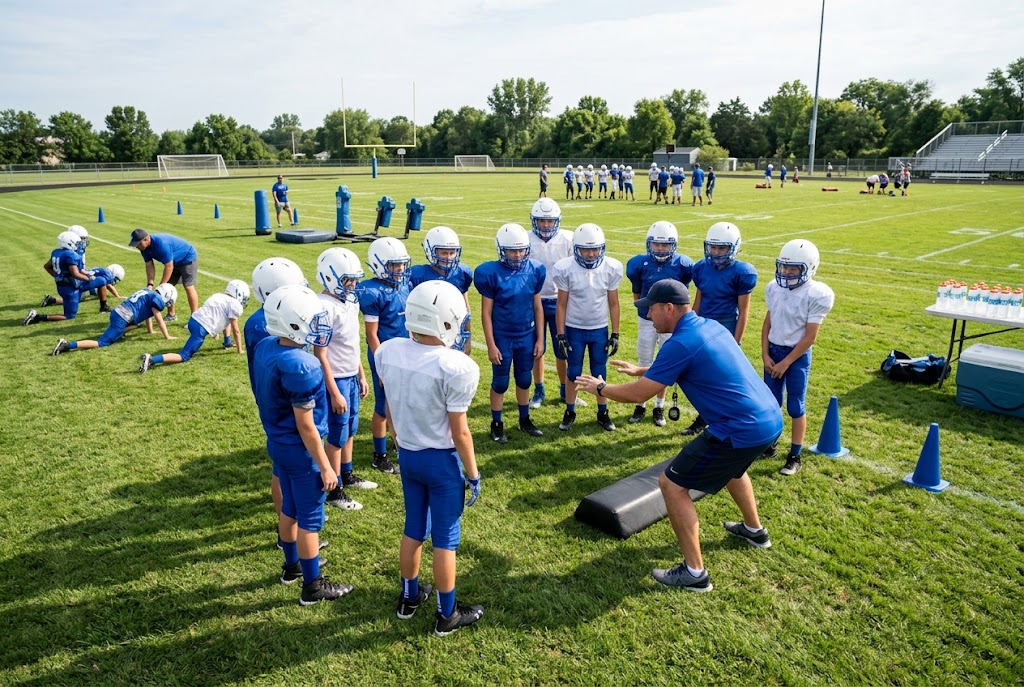
Youth football safety isn’t just about avoiding scraped knees or the occasional bruise — it’s about protecting still-developing bodies during years that matter enormously for long-term physical health. Understanding why safety deserves this level of attention helps parents and coaches take it seriously rather than treating it as an afterthought.
First, children’s bodies are still growing. Bones, joints, and connective tissue in kids and young teens haven’t finished developing, which makes them more vulnerable to certain injuries than fully grown adults. A tackle or fall that an adult body might absorb without issue can cause more significant harm to a developing frame, which is why age-appropriate contact rules and proper technique are so heavily emphasized in youth leagues today.
Second, head injuries carry long-term consequences. Concussion awareness has transformed youth football over the past decade, driven by growing research into how repeated head impacts can affect a young, developing brain. Following safety protocols around recognizing, reporting, and properly recovering from head injuries isn’t optional — it’s one of the most important responsibilities coaches and parents share.
Third, heat-related illness remains a serious, often underestimated risk. Kids don’t regulate body temperature as efficiently as adults, and early-season practices often coincide with hot summer weather. Without proper hydration and rest breaks, players can face heat exhaustion or, in severe cases, heat stroke — both of which are entirely preventable with basic precautions.
Fourth, safety builds trust and long-term participation. Parents who feel confident that a program prioritizes their child’s wellbeing are far more likely to keep their kids involved in the sport long-term. Leagues and coaches who visibly prioritize youth football safety tips tend to retain more players season after season, since word travels quickly among parents about which programs take safety seriously.
Finally, safe habits formed early carry forward. Kids who learn proper tackling technique, warm-up routines, and injury-reporting habits in youth football carry those habits into high school and beyond, making them safer, smarter athletes throughout their playing careers.
Different Types of Youth Football Safety Tips
Below are more than ten essential safety categories every parent, coach, and youth player should understand before stepping onto the field.
1. Properly Fitted Equipment
Ill-fitting equipment is one of the most common and most preventable safety issues in youth football. Helmets should sit level on the head, cover the forehead just above the eyebrows, and not shift when the player shakes their head side to side. Shoulder pads need to align with the shoulder joint without gaps, and mouthguards should be properly fitted rather than a generic one-size option. Parents should recheck equipment fit at the start of every season, since kids grow quickly and last year’s gear may no longer fit correctly.
2. Concussion Awareness and Protocols
Recognizing the signs of a concussion — confusion, dizziness, headache, sensitivity to light, or balance issues — is one of the most critical youth football safety tips any coach or parent can learn. Any player suspected of a head injury should be removed from play immediately and not allowed to return the same day, regardless of how minor the symptoms seem. Most youth leagues now require a clearance evaluation from a medical professional before a player can return to practice or games, and this protocol should never be skipped or rushed.
3. Proper Tackling Technique
Poor tackling form is a leading cause of preventable injuries in youth football, particularly to the head and neck. Modern coaching emphasizes “heads-up” tackling, where players lead with their shoulder rather than their helmet, keep their eyes up, and wrap up rather than launching into contact. Many leagues now require certified tackling technique training for coaches before the season begins, and reinforcing this technique in every practice helps make safe habits automatic during games.
4. Age-Appropriate Contact Levels
Not every level of youth football needs full-contact practices, and many leagues have adopted contact limits based on age and experience level. Younger age groups often use modified rules with reduced or no tackling, gradually introducing contact as players get older and develop proper technique. Limiting live contact reps during practice, even at older age levels, has been shown to reduce cumulative impact exposure without sacrificing skill development.
5. Heat and Hydration Management
Heat illness is a serious risk during preseason practices, which often fall in the hottest months of the year. Coaches should schedule regular water breaks every 15 to 20 minutes during hot-weather practices, watch for signs of heat exhaustion like excessive fatigue, nausea, or pale skin, and adjust practice intensity or move sessions indoors or to early morning hours when temperatures spike. Players should also be encouraged to hydrate well before arriving at practice, not just during it.
6. Proper Warm-Up and Stretching Routines
Skipping warm-ups is a common shortcut that increases injury risk, particularly for muscle strains and joint sprains. A proper pre-practice routine should include light jogging, dynamic stretches like leg swings and high knees, and sport-specific movement drills that gradually raise the heart rate and prepare muscles for more intense activity. This routine should be non-negotiable at every practice and game, not just something reserved for the first week of the season.
7. Strength and Conditioning for Injury Prevention
Building foundational strength, particularly in the neck, core, and legs, helps young athletes better absorb the physical demands of football and reduces injury risk. Age-appropriate strength training — using bodyweight exercises rather than heavy weights for younger kids — builds the muscular support needed to protect joints during contact and quick directional changes. Conditioning also improves overall stamina, reducing the fatigue-related lapses in form that often lead to injury late in practices or games.
8. Weather and Lightning Safety
Beyond heat, coaches need clear protocols for other weather hazards, particularly lightning. Most youth sports organizations follow a standard rule of suspending outdoor activity if thunder is heard or lightning is seen, and waiting a set period after the last strike before resuming play. Having a clear, communicated weather policy — rather than making judgment calls in the moment — removes ambiguity and keeps players safely off the field during dangerous conditions.
9. Field and Facility Safety Checks
A safe playing surface is just as important as safe technique. Coaches or designated staff should routinely check practice and game fields for hazards like holes, debris, uneven turf, or exposed sprinkler heads before players take the field. Goalposts, benches, and other fixed equipment should also be checked periodically to ensure nothing poses a hidden risk, particularly at facilities shared with other sports or community groups.
10. Injury Reporting and Communication
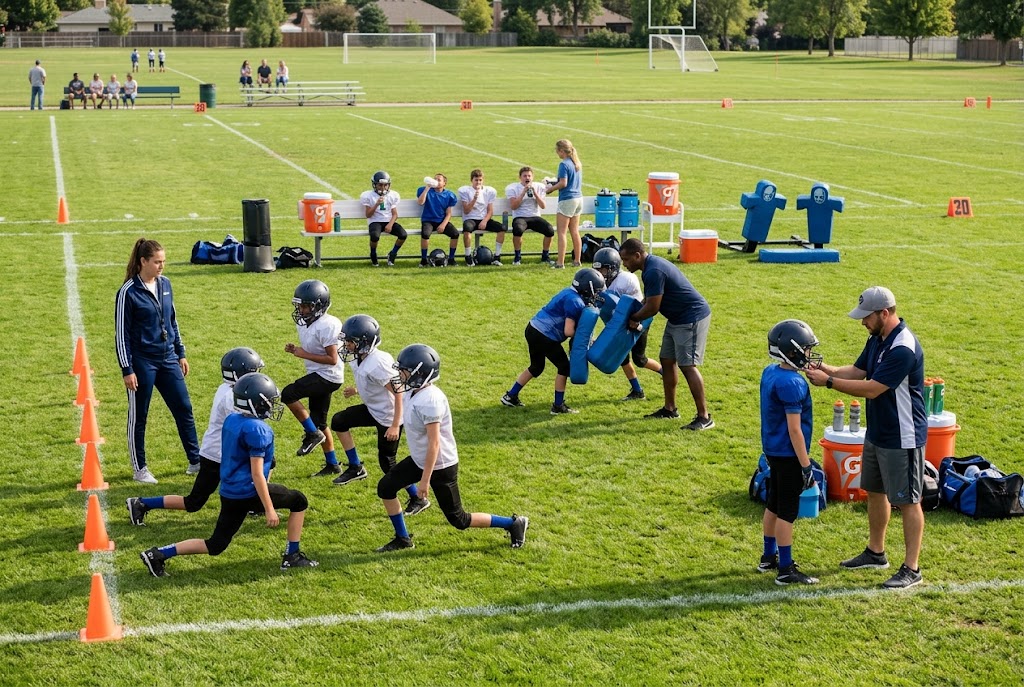
Encouraging kids to speak up about pain or discomfort — rather than “playing through it” — is one of the most overlooked youth football safety tips. Coaches should create an environment where reporting an injury isn’t seen as weakness, and parents should reinforce that message at home. Clear communication channels between coaches, athletic trainers (where available), and parents ensure that injuries are tracked, treated, and properly cleared before a player returns to action.
11. Nutrition and Recovery
Proper nutrition supports muscle recovery, energy levels, and overall injury resilience, yet it’s often overlooked in youth safety conversations. Young athletes need balanced meals with adequate protein and carbohydrates, particularly on practice and game days, along with sufficient sleep for recovery. Chronic under-fueling or poor sleep habits can increase fatigue-related injury risk and slow recovery from the natural bumps and strains that come with regular play.
12. Emergency Action Planning
Every youth football program should have a clear, written emergency action plan covering how to respond to serious injuries, including who calls emergency services, where the nearest emergency exit or access point is, and who is trained in first aid or CPR. Coaches and staff should review this plan before the season starts, not scramble to create one after an incident occurs. Having this structure in place ensures a fast, organized response if a serious situation ever arises.
FAQs About Youth Football Safety Tips
1. At what age is it safe for kids to start playing tackle football? There’s ongoing debate among medical experts, and many organizations now recommend flag football or non-contact formats for younger children, with full tackle football introduced gradually as kids get older and coaching quality improves.
2. How can parents tell if a helmet fits properly? A properly fitted helmet should sit level on the head, feel snug without excessive pressure, cover the forehead just above the eyebrows, and not shift or wobble when the child moves their head side to side or up and down.
3. What should a coach do if a player shows concussion symptoms? The player should be removed from play immediately, monitored for worsening symptoms, and not allowed to return until cleared by a qualified medical professional, regardless of how the player says they feel.
4. How often should equipment be replaced? Helmets typically need reconditioning or replacement every few years depending on manufacturer guidelines and usage, and any equipment showing visible cracks, loose padding, or damage should be replaced immediately rather than repaired informally.
5. How much water should young players drink during practice? General guidance suggests regular small amounts throughout practice, roughly every 15 to 20 minutes, rather than waiting until a player feels thirsty, since thirst often lags behind actual hydration needs, especially in hot weather.
6. Is full-contact practice necessary every session? No. Many successful youth programs limit live-contact reps during practice, relying more heavily on technique drills and controlled, lower-intensity contact to reduce injury risk while still building skill and confidence.
7. What are early signs of heat exhaustion in young athletes? Common signs include heavy sweating, fatigue, dizziness, nausea, headache, and pale or clammy skin. Any of these symptoms should prompt an immediate break, shade, and fluids, with medical attention sought if symptoms worsen or don’t improve quickly.
8. Should young players lift weights for football conditioning? Bodyweight exercises and age-appropriate strength training are generally recommended over heavy weightlifting for younger kids, focusing on building foundational strength and coordination rather than maximum load.
9. How do I know if my child’s league follows proper safety protocols? Ask directly about coach certification requirements, concussion protocols, contact limits by age group, and emergency action plans. A well-run league should be able to answer these questions clearly and confidently.
10. What should be in a youth football first aid kit? A solid kit includes basics like bandages, ice packs, antiseptic wipes, tape, and a CPR mask, along with any player-specific medical information like allergies or asthma inhalers that coaches may need quick access to.
11. Can proper technique really prevent injuries? Yes. Numerous studies and coaching guidelines point to proper tackling and blocking technique as one of the most effective ways to reduce injury risk, particularly for head and neck injuries, compared to equipment alone.
12. How should parents talk to kids about reporting pain or injuries? Frame it as a strength, not a weakness. Reinforce that telling a coach about pain keeps them in the game longer over time, and that pushing through injuries often leads to longer recovery periods down the road.
13. What role do athletic trainers play in youth football safety? Where available, athletic trainers provide on-site injury assessment, manage concussion protocols, and serve as a communication bridge between coaches, parents, and medical providers, significantly improving overall program safety.
14. Are safety standards different for flag football versus tackle football? Yes. Flag football eliminates most collision-based risks, making it a popular lower-risk entry point for younger kids, while tackle football requires more extensive protocols around contact, equipment, and injury monitoring.
15. How can coaches build a strong safety culture on their team? Consistency matters most. Reinforcing warm-ups, proper technique, hydration breaks, and open injury reporting at every single practice — not just occasionally — builds habits that players carry with them well beyond a single season.
Conclusion
Youth football will always involve some level of physical risk, but the vast majority of serious injuries are preventable with the right knowledge, preparation, and consistency. Following well-established youth football safety tips — from properly fitted equipment and concussion protocols to heat management and clear emergency planning — gives kids the chance to enjoy everything the sport has to offer without unnecessary risk to their long-term health.
Parents and coaches share the responsibility of building a safety-first culture, one where players feel comfortable speaking up, technique is prioritized over toughness, and precautions are treated as routine rather than optional. When youth football safety tips become second nature at every level of a program, kids get to focus on what matters most: learning the game, building friendships, and growing into confident, resilient athletes.